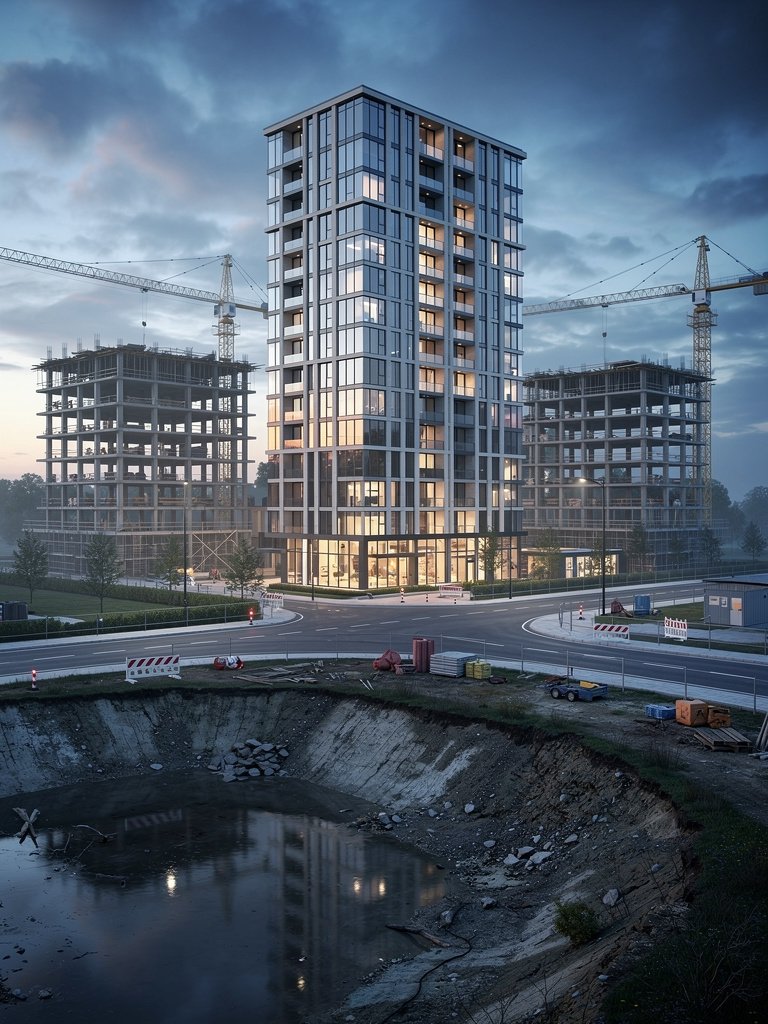

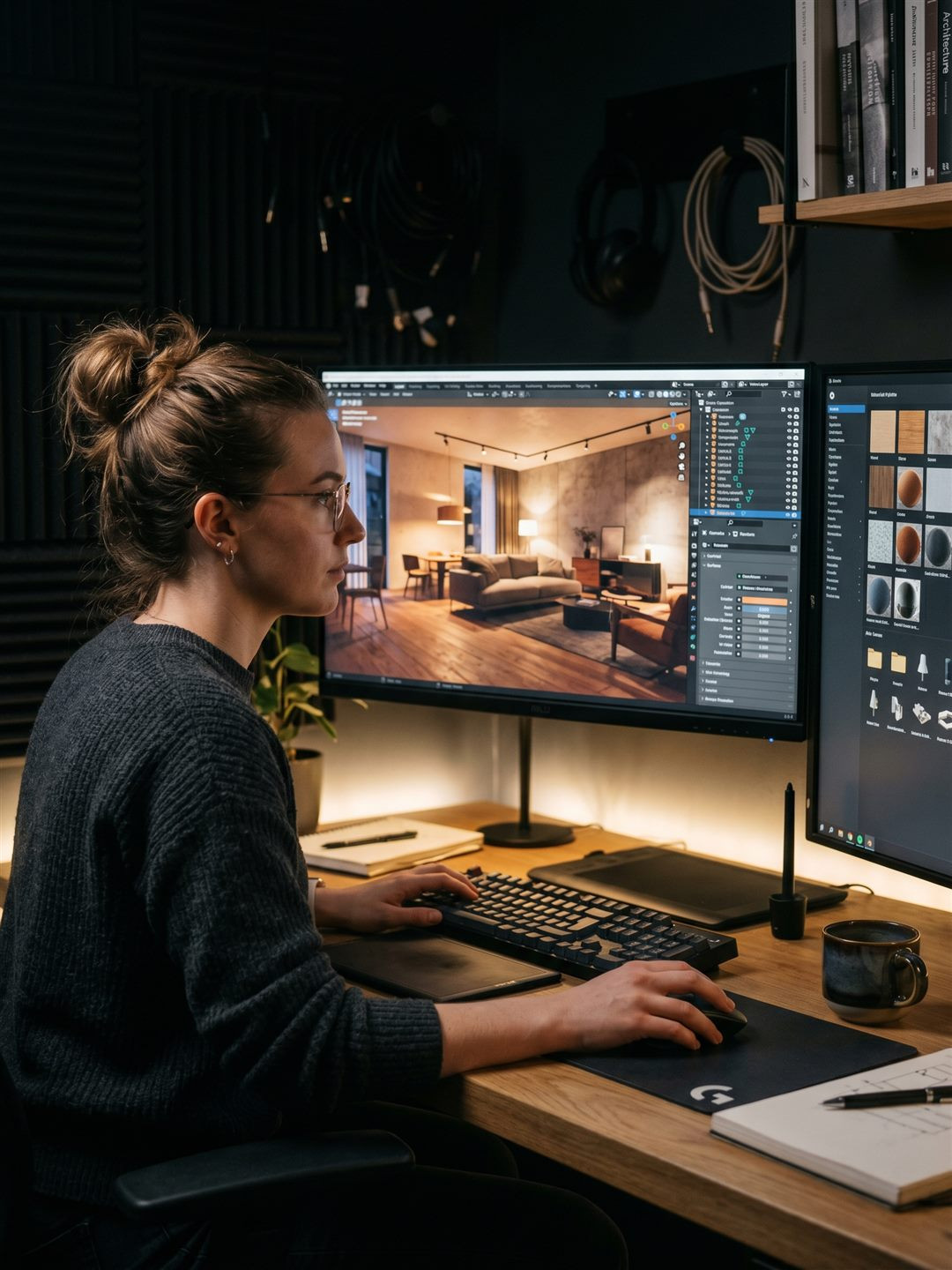
A buyer stands in a sales gallery, unsure about a kitchen. The agent taps a screen, and the walnut cabinetry becomes pale oak, the pendant lights warm, and the afternoon sun shifts across the floor. The hesitation disappears, and the conversation moves to which finish, not whether to buy at all.
Table of Contents
That moment is what real-time architectural visualization makes possible, and it is quietly rewriting how unbuilt property is sold. The image is no longer a fixed picture handed to a client; it is a space they can steer themselves.
For developers and studios accustomed to commissioning static frames weeks in advance, the shift is bigger than a new tool. It changes the rhythm of the entire sales conversation, and with it the speed of the decision.
1. What Real-Time Architectural Visualization Actually Means

Traditional rendering calculates a single frame over hours, then hands it back finished and unchangeable. Real-time architectural visualization renders the scene continuously, so any change appears the instant it is made.
The engines behind it grew up in video games. Tools built on real-time rendering now reach a fidelity that, only a few years ago, demanded an overnight render to achieve.
The practical result is simple. The picture stops being a deliverable and becomes an interface, where light, materials, furniture and even the time of day all respond on demand.
2. From Static Frames to a Live Conversation
The old workflow was strictly linear. A studio produced a frame, the client requested a change, and everyone waited a day or two for the next version to arrive in their inbox.
Architectural visualization collapses that loop entirely. The same change that once cost a full revision round now happens in the meeting itself, while the client watches it take shape.

This does not only save time; it changes who holds the pen. The client stops describing what they want and simply shows it, which is why visualization reduces revision rounds so sharply and removes the most expensive source of misunderstanding in the process.
3. Why Buyers Decide Faster When They Can Explore
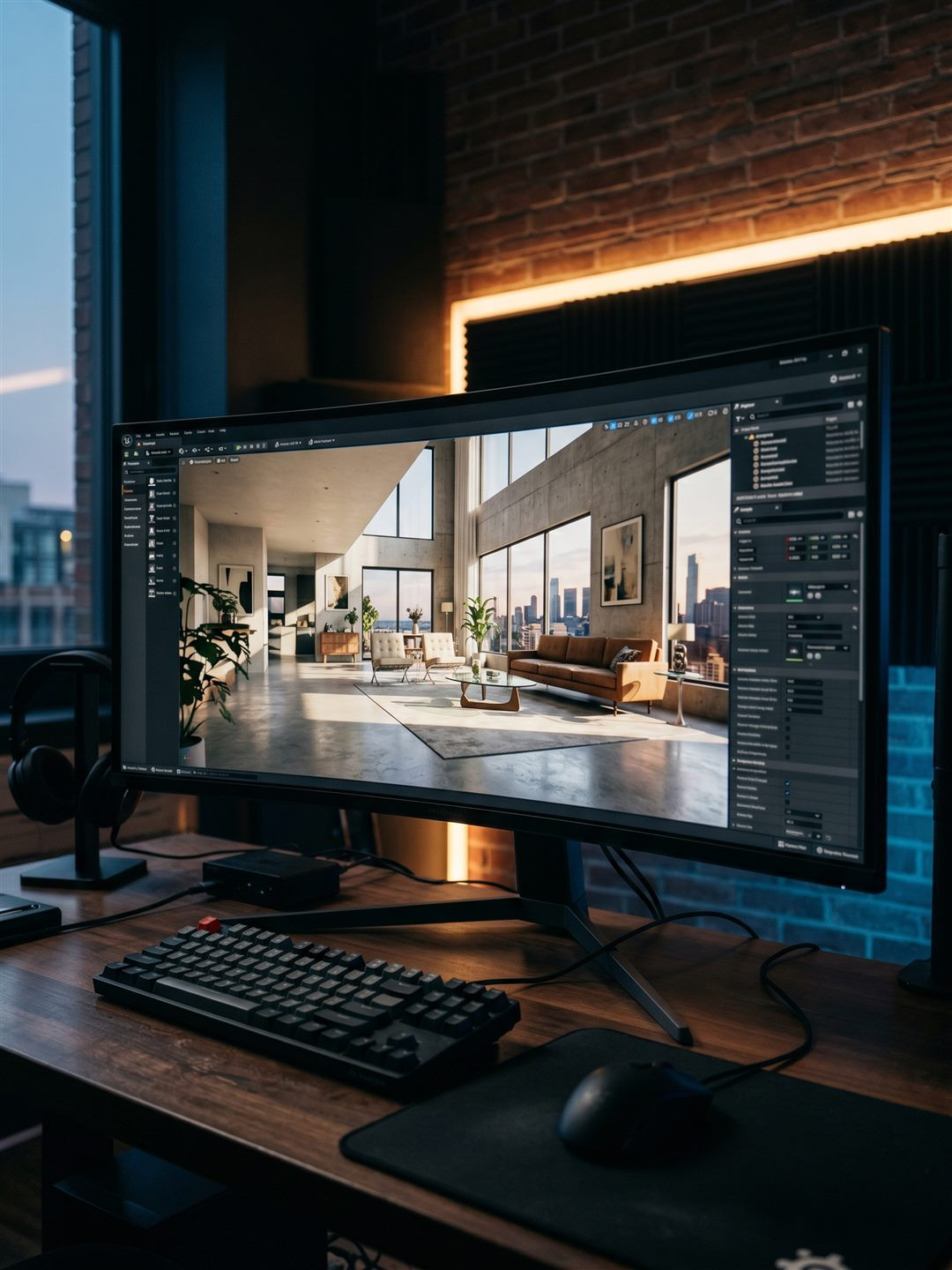
People commit to spaces they feel they understand, and architectural visualization gives them that understanding directly. A static render asks a buyer to imagine the room; a live walkthrough lets them inhabit it.
When a buyer changes a finish and immediately sees the consequence, the decision starts to feel like theirs rather than the developer’s. That quiet sense of authorship is what shortens the path from polite interest to a signed reservation.
For off-plan sales in particular, visualization narrows the gap between a promise and a proof. The buyer is no longer being asked to trust a picture; they are actively testing a space they intend to own.
4. The Limits Worth Knowing Before You Switch
None of this makes traditional rendering obsolete, and architectural visualization is not the right answer for every job. A hero still image, crafted patiently for a billboard or a magazine spread, can still out-shine a live frame for sheer polish.

Real-time scenes also demand far heavier preparation. The asset has to be built to react correctly to every possible choice, which front-loads effort the audience never directly sees.
The hardware matters just as much. A configurator that stutters undermines the very confidence it is meant to build, so the experience has to be tested on the actual screens it will run on in the gallery.
5. Where This Leaves Developers and Studios
The smart move is not to replace stills with real-time, but to pair them deliberately. Use crafted images to attract attention, and visualization to convert once a buyer is in the room and ready to commit.
Studios that master architectural visualization now will shape the next decade of premium property marketing, because they will be selling participation rather than just pictures. If you want to bring an interactive experience to your next launch, Arkilex can help you plan a real-time configurator alongside the still images that still do the heavy lifting up front.
It helps to picture the change in plain commercial terms. A static render is a brochure; Visualization is a test drive, and buyers rarely commit to a home they were never allowed to walk through. The developers who grasp this are not simply buying prettier graphics; they are removing the final layer of doubt that sits between a serious buyer and a signature.
Cost follows the same logic. An interactive scene is more expensive up front than a single still, yet it can be reused across every buyer who visits the sales suite, spreading the investment across an entire campaign rather than one frame. For a development with dozens of units and a gallery open for months, that maths frequently favours the interactive route.
The psychology is not subtle either. A choice a buyer makes with their own hand feels safer than one presented to them, even when the options are identical. Turning a passive viewer into an active participant is the quiet mechanism behind every faster decision, and it is difficult to achieve with static images alone.
For studios, the message is equally direct. The craft of lighting and composition still matters enormously, but it now sits beside a second skill entirely: building scenes that hold up under a client who is free to touch and change everything in the room.
6. Frequently Asked Questions
What is real-time architectural visualization?
It is rendering that updates a three-dimensional scene instantly as changes are made, so clients can explore materials, lighting and layout live rather than waiting for new static images.
Does real-time rendering replace traditional renders?
No, the two work together. Architectural visualization excels at interactive exploration, while traditional rendering still produces the highest-polish hero images for marketing.
Is real-time visualization useful for off-plan sales?
Yes, because it lets buyers experience and personalise an unbuilt space, which builds genuine confidence and tends to shorten the decision to reserve.
What does a real-time project need that a static render does not?
Carefully prepared, reactive 3D assets and capable display hardware, since the scene must respond smoothly to every choice a viewer makes.
“An absolutely excellent 3D team that I genuinely enjoy working with - always attentive, responsive, and open to adjustments. Communication is seamless and the results consistently meet our expectations. A trusted partner I recommend without hesitation.”
— Sofia Bouziane ★★★★★ · Google review