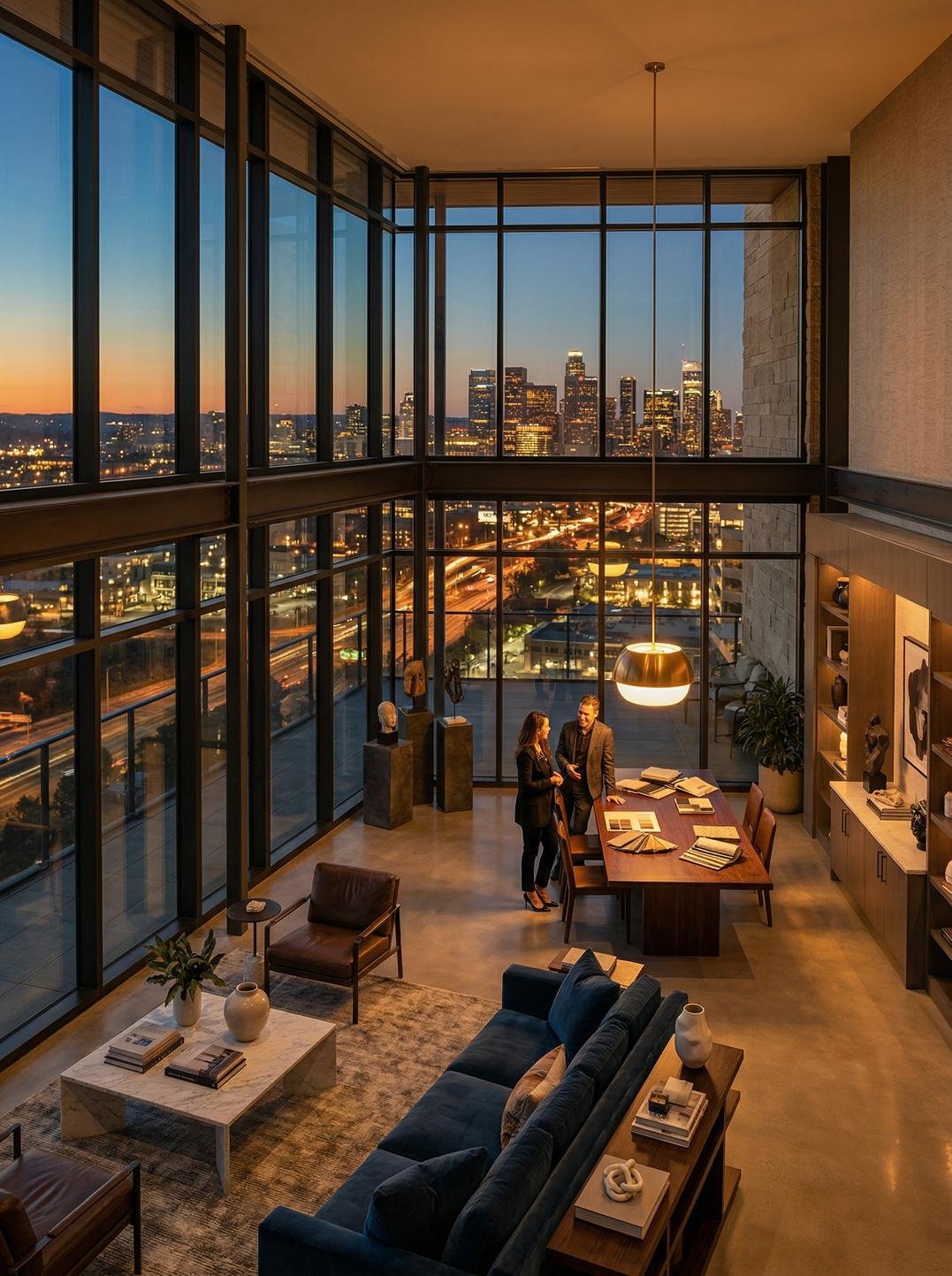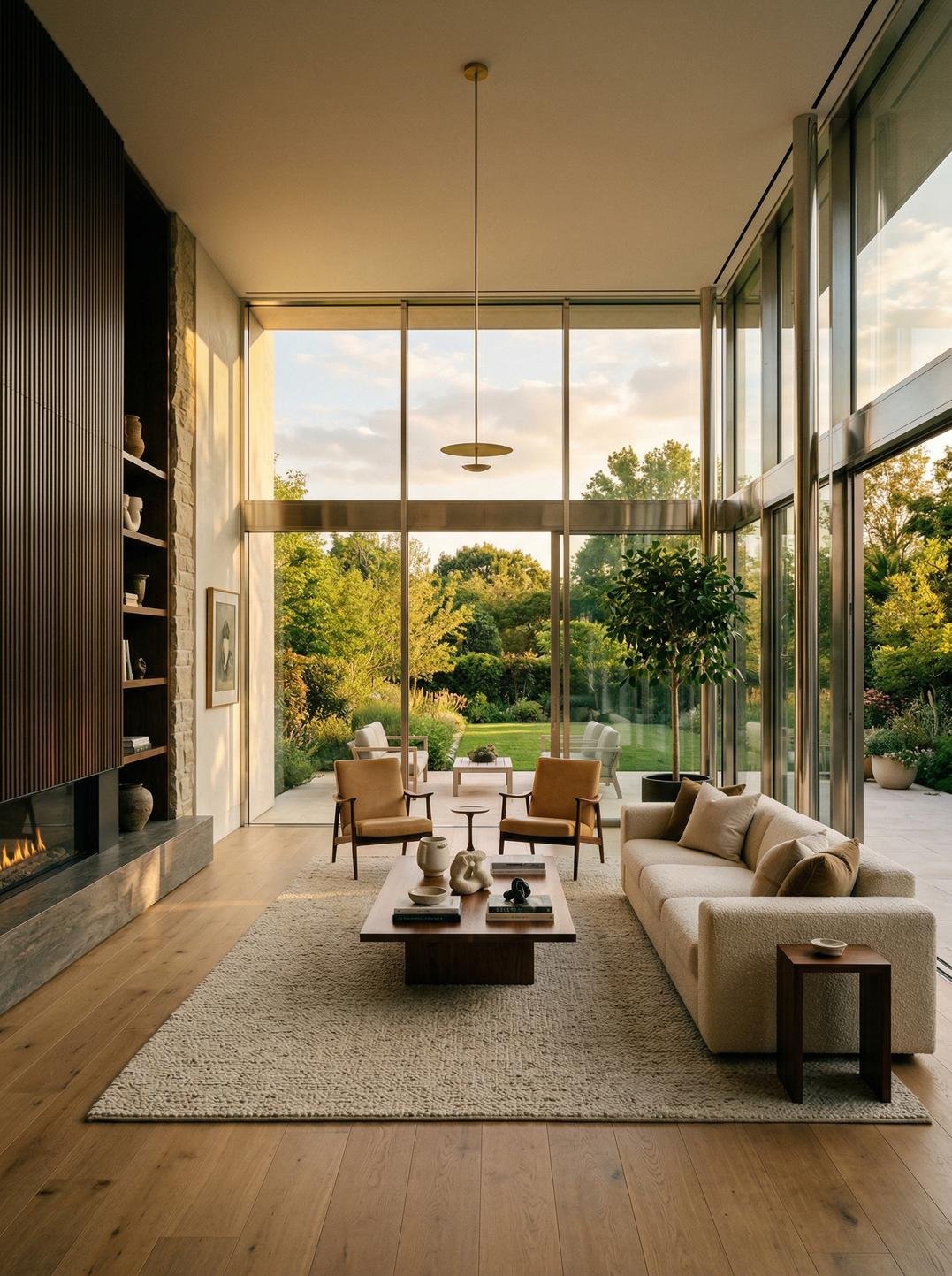

Winning architectural commissions, development approvals, and investment rounds all have something in common: someone is deciding whether to commit based primarily on what they can see. The quality of your visualization is doing a significant portion of the persuasion work in every one of those rooms.
Table of Contents
1. Why Subpar architectural visualization Kills Developer Presentations Before the Meeting Starts
The initial pitch to an institutional investor, a zoning board, or a luxury homebuyer hinges entirely on first impressions. If the visual assets look flat, poorly lit, or structurally inaccurate, the perceived value of the asset drops instantly. High-quality architectural visualization bridges the critical gap between highly technical floor plans and emotional buyer engagement.
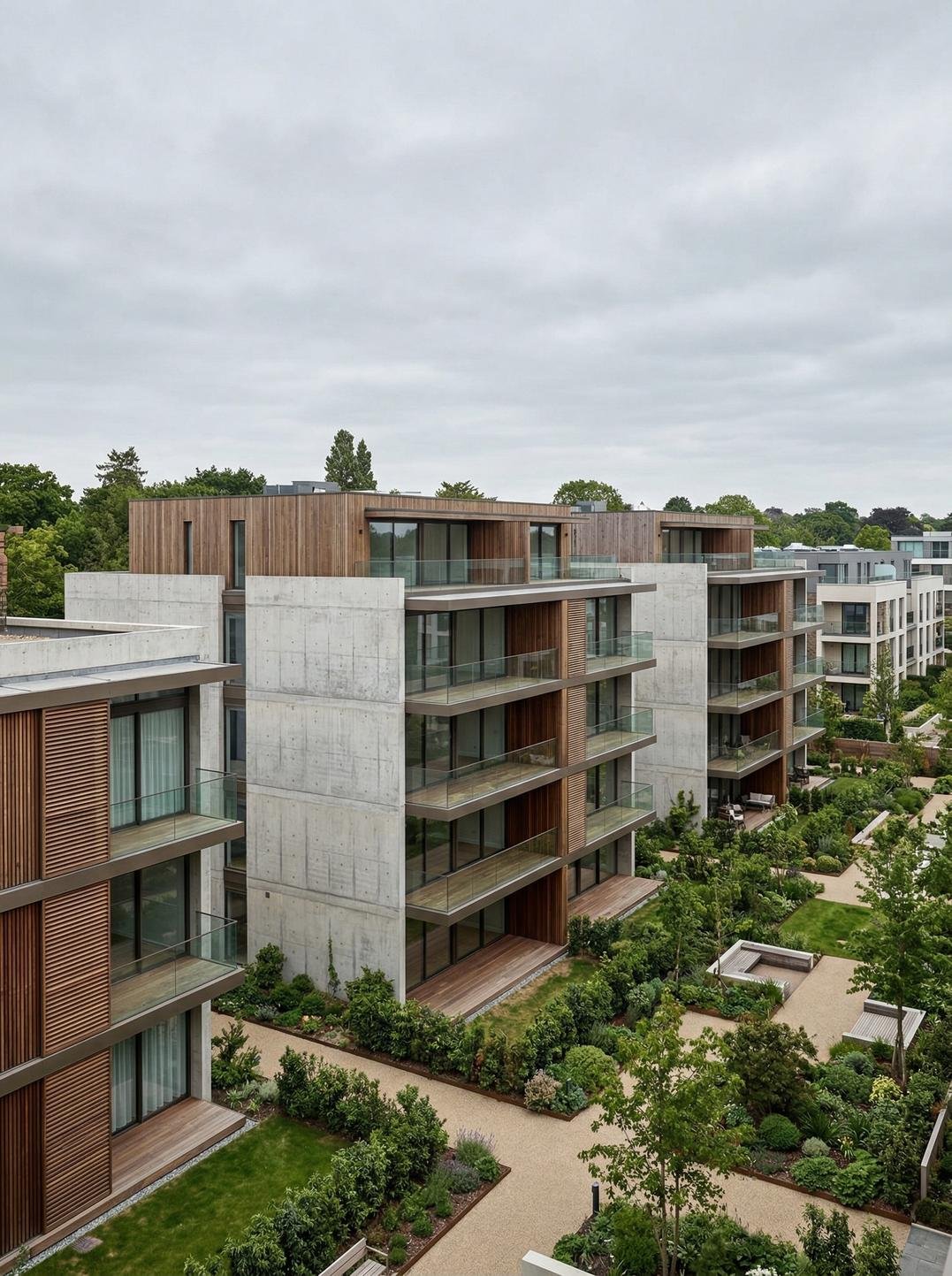
When marketing a new commercial tower or an expansive residential complex, relying on a top-tier photorealistic exterior rendering allows developers to showcase the property exactly as it will exist within its future environment. Accurate light integration, realistic landscaping, and precise material textures communicate a level of professionalism that secures early funding and accelerates pre-leasing commitments. Investors need to see where their capital is going; providing them with a flawless visual narrative removes ambiguity, highlights the architectural merit of the project, and directly supports premium pricing models in competitive real estate markets.
2. The Four-Stage Workflow Behind a Commercial Property Render
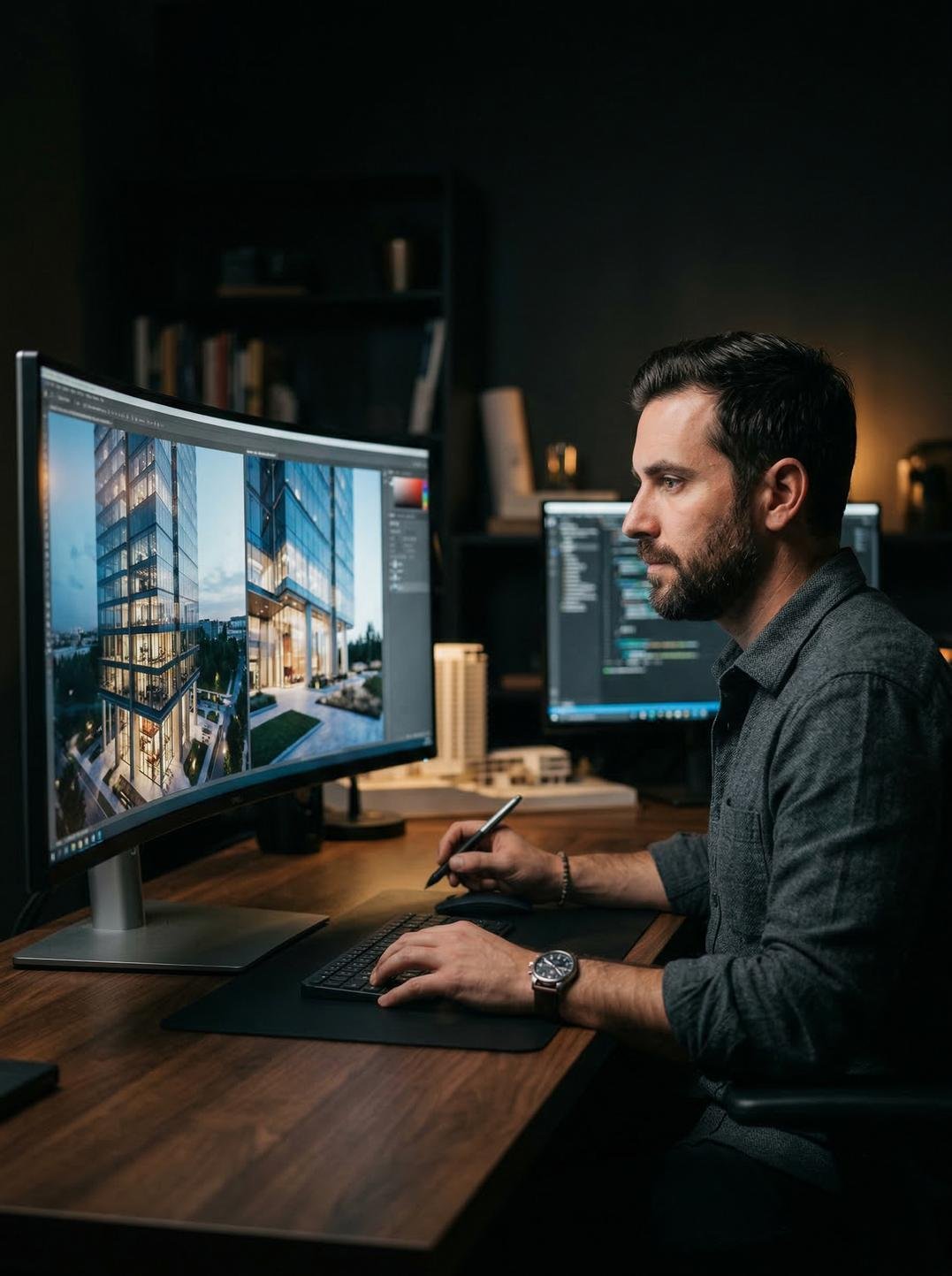
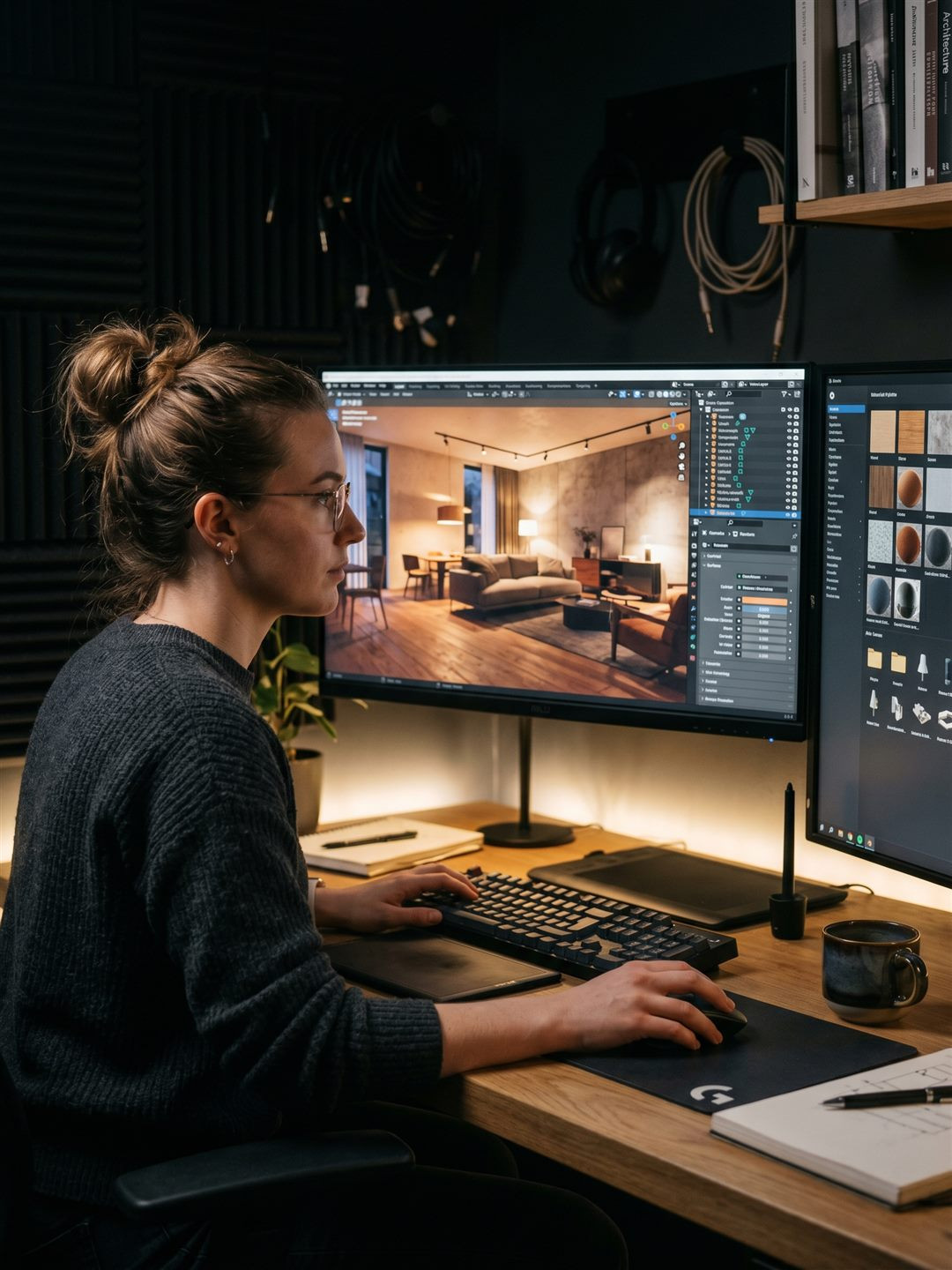
Producing a marketing-ready asset requires a disciplined, highly technical workflow that goes far beyond basic 3D modeling. The process begins with the geometry phase, where native CAD files, Rhino models, and Revit data are translated into a precise structural framework. Next, the 3D artists apply meticulous material mapping, ensuring that the physical properties of concrete, low-E glass, and brushed steel reflect, refract, and absorb light accurately based on real-world physics.
Lighting design follows, where specialists mimic specific times of day—such as the warm golden hour or a moody overcast afternoon—to evoke the targeted atmosphere for the buyer demographic. Finally, advanced post-production refines the asset by adding entourage elements like people, realistic vehicles, and native foliage. A highly detailed photorealistic exterior rendering demands exact environmental context, placing the unbuilt structure seamlessly into its surrounding cityscape or natural topography. Mastering this rigorous workflow guarantees that the final architectural visualization aligns perfectly with the architect’s original intent while simultaneously meeting the developer’s strict commercial objectives.
3. How Accurate Renders Reduce Revision Cycles by Half

Time is the most expensive variable in real estate development. Protracted design review phases can delay marketing rollouts by weeks, ultimately pushing back launch dates and increasing carrying costs. Top-tier architectural firms mitigate this risk by integrating 3D assets early in the design phase rather than waiting for the final sign-off.
By reviewing a mathematically accurate architectural visualization, stakeholders can instantly spot design flaws, material clashes, or natural lighting issues that are nearly impossible to detect on a standard 2D elevation. This proactive approach enables development teams to finalize crucial decisions on facade treatments, mullion spacing, and interior spatial flows rapidly. Furthermore, during value engineering phases, seeing the alternative materials in context helps maintain the design’s integrity while strictly managing the project budget. Consequently, developers avoid costly mid-construction change orders, streamline contractor communications, and keep the overall project schedule efficiently on track.
4. The Detail Investors Notice First — and Studios Often Miss

An experienced investor or high-net-worth buyer can spot an outsourced, low-effort visual asset in seconds. The most common mistake inexperienced studios make is ignoring micro-imperfections. Real-world surfaces are rarely pristine; glass has subtle warping, poured concrete features slight discolorations, and natural sunlight diffuses unevenly across different textures. When an image lacks these natural anomalies, it looks sterile, flat, and entirely synthetic.
Another critical pitfall is incorrect scale and proportion regarding the entourage. If a photorealistic exterior rendering features improperly scaled vehicles or overly repetitive foliage that looks like cloned stamps, the viewer’s brain immediately registers the image as fake, silently undermining trust in the project’s overall quality. To prevent this, developers must partner with an architectural visualization team that fundamentally understands architectural photography principles. Ensuring every camera angle, depth of field adjustment, and lens millimeter equivalent mirrors how a professional architectural photographer would capture the physical building is what separates standard drafting from premium visual marketing.
5. Conclusion
Securing lucrative off-plan sales and expediting investor approvals relies heavily on the quality, realism, and accuracy of your marketing materials. Executing a flawless architectural visualization strategy ensures that every stakeholder fully comprehends the value, scale, and atmosphere of your project long before the heavy machinery arrives on site. If you are ready to elevate your upcoming development presentations, minimize design revision times, and dramatically accelerate your sales cycles, contact Arkilex today to request a custom quote and schedule a free consultation to review our portfolio.
6. FAQs
How does architectural visualization integrate with our existing BIM workflow?
A professional architectural visualization studio can directly import your Revit, SketchUp, or ArchiCAD files to build the structural geometry. This ensures complete spatial accuracy and adherence to the plans while the 3D artists focus on applying high-end textures and atmospheric lighting to elevate the final asset.
What is the typical turnaround time for a photorealistic exterior rendering?
For a standard commercial or luxury residential photorealistic exterior rendering, the process generally takes two to three weeks. This timeline accounts for the initial data translation, 3D modeling, drafting, structured client review cycles, and the final high-resolution post-production phase.
Can architectural visualization be used for local zoning board approvals?
Absolutely. Presenting high-quality visual assets provides town planners, community stakeholders, and zoning boards with clear, contextualized imagery of how the proposed development will integrate into the existing neighborhood, which often mitigates concerns and significantly accelerates the approval process.
How do revisions work during the rendering process?
Most professional studios build two to three structured revision rounds into the project timeline. The first round focuses on approving camera angles and structural massing, while subsequent rounds refine the material finishes, lighting conditions, and specific entourage details to ensure complete alignment with the developer’s commercial vision.
“An absolutely excellent 3D team that I genuinely enjoy working with – always attentive, responsive, and open to adjustments. Communication is seamless and the results consistently meet our expectations. A trusted partner I recommend without hesitation.”
— Sofia Bouziane ★★★★★ · Google review